Ukraine's Wartime Travel Ban: Human Rights Violations Amid National Emergency
Russia's full-scale invasion forced Ukraine to ban men aged 18-60 from leaving the country. While aimed at national defense, this policy raises serious human rights concerns about freedom of movement, gender discrimination, and forced conscription practices.
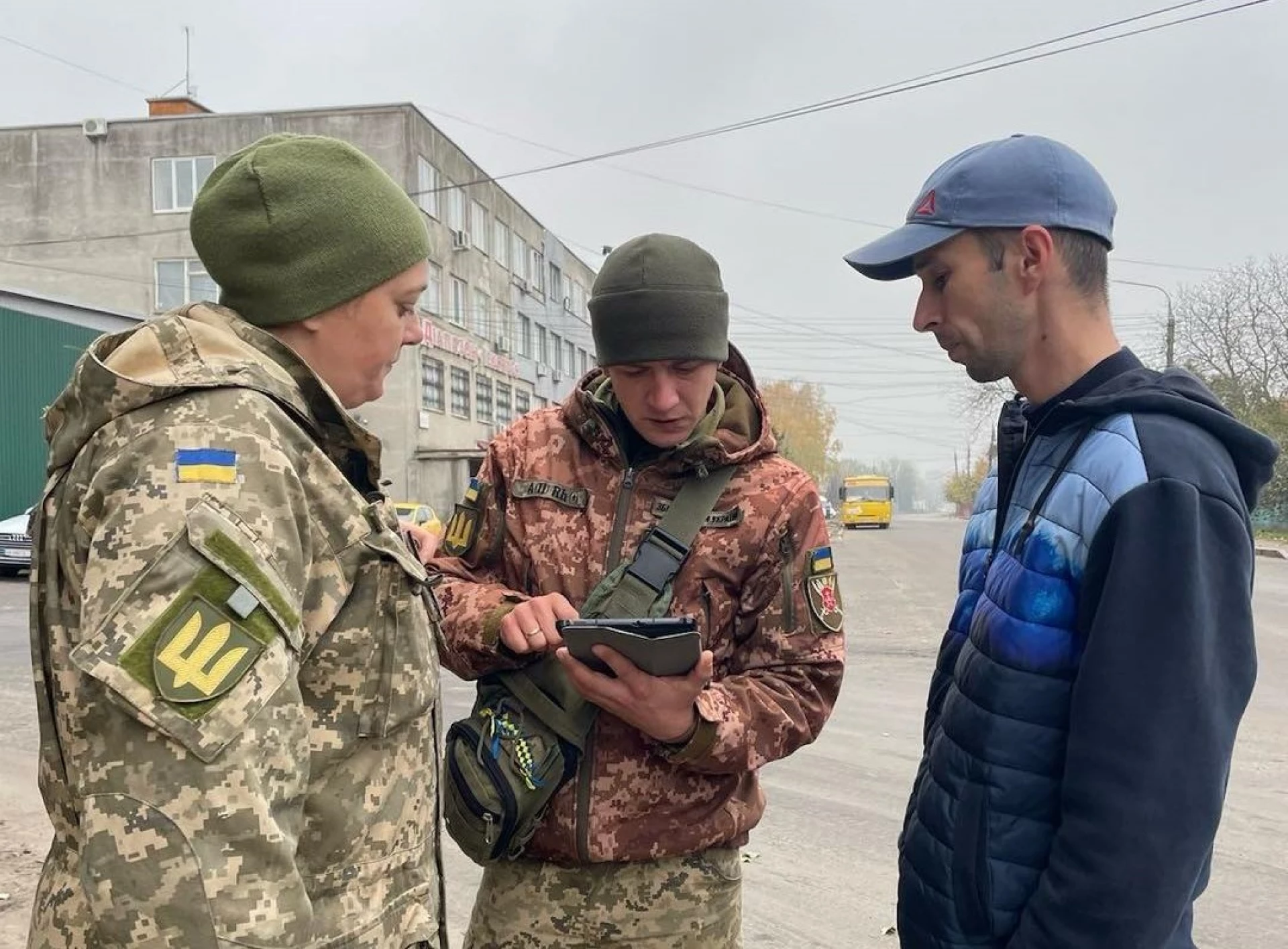
Ukrainian military recruitment officers conducting document checks - a common scene amid the country's wartime mobilization efforts.
Introduction
Russia's full-scale invasion of Ukraine in 2022 forced the Ukrainian government to take extraordinary measures. One of the most controversial is the ban on men aged 18 to 60 from leaving the country under martial law.
The policy aims to ensure Ukraine has enough reservists and conscripts to defend the nation. Indeed, millions of women and children fled as refugees, while most men of fighting age were obliged to stay and potentially fight. However, this wartime policy has raised serious human rights concerns.
Reports have emerged of forced conscription practices - military recruiters physically detaining men in public places, sometimes with violence. Many question whether the blanket restriction on male travel and these enforcement methods violate fundamental rights and freedoms.
As a neutral but concerned observer who respects Ukraine's struggle and understands its existential crisis, I believe it is crucial to analyze these issues through the lens of international human rights and law. Even in a war for survival, human rights violations cannot be justified or ignored, and democratic principles should be upheld as much as possible.
International Law Framework: Emergency Powers vs Human Rights
War and national emergencies do allow states to limit certain rights, but international law sets boundaries. Ukraine is party to key treaties like the International Covenant on Civil and Political Rights (ICCPR) and the European Convention on Human Rights (ECHR). These guarantee rights such as freedom of movement and equality before the law, while also permitting temporary derogations (suspensions of certain obligations) in extreme emergencies.
On 24 February 2022, Ukraine declared nationwide martial law and notified the United Nations and Council of Europe of a possible derogation under ICCPR Article 4(1) and ECHR Article 15(1). These provisions allow derogation "in time of public emergency threatening the life of the nation" - a threshold clearly met by the full-scale invasion.
However, any measures taken must be "strictly required by the exigencies of the situation" and consistent with other international obligations. Crucially, even during emergencies, certain rights cannot be suspended: for example, the right to life and the freedom of thought, conscience, and religion are non-derogable (ICCPR Articles 6 and 18).
No emergency can justify discrimination on the basis of gender, religion, or other protected grounds. In other words, states must still uphold the core of human rights and avoid arbitrary or discriminatory measures when invoking emergency powers. This legal framework will guide our analysis of Ukraine's travel ban and related practices.
Freedom of Movement and the Right to Leave
Freedom of movement, including the right to leave one's own country, is a well-established human right. It is enshrined in Article 12(2) of the ICCPR and Article 2(2) of Protocol No.4 to the ECHR, as well as Article 13(2) of the Universal Declaration of Human Rights. Ukraine's wartime ban on men aged 18-60 exiting the country is a direct restriction of this right.
To be lawful under human rights law, such a restriction must have a clear legal basis, a legitimate aim, and be proportionate. The official aim here is national defense - an undeniably weighty interest during an invasion. However, questions arise about the lawfulness and proportionality of the blanket ban.
Notably, Ukraine's initial martial law decree did not explicitly forbid citizens from leaving but authorized the government to impose needed restrictions. The State Border Guard Service nonetheless started enforcing a categorical ban on all men 18-60 from day one. Critics argue this was done without a clearly defined law, creating ambiguity about whether the measure was "in accordance with the law" as required by the ECHR.
European Court Review: The European Court of Human Rights (ECtHR) is scrutinizing these issues in a case brought by affected Ukrainian men. In the communicated case Konichenko v. Ukraine (2023), the Court questions whether the travel ban was strictly necessary and lawful, and whether Ukraine properly invoked its derogation for freedom of movement.
Given that everyone "must have a true choice to leave [a] war zone" under human rights law, the travel ban's sweeping nature is legally problematic. It trapped even those who are not militarily eligible or willing - such as men unfit for service, conscientious objectors, or simply civilians fearing for their lives.
Gender Discrimination: Men, Women and Equal Protection
One of the most contentious aspects of Ukraine's exit ban is that it applies only to men, raising concerns of gender discrimination. Under international law, equal protection and non-discrimination are fundamental. The ICCPR (Articles 2(1) and 26) and the ECHR (Article 14) oblige states to ensure that rights are enjoyed "without distinction of any kind," including sex.
In this case, the ban reflects a traditional notion that "men must fight, women and children may flee." As noted by legal analysts, it enforces the conception of men as soldiers and women as the vulnerable group of refugees.
ECtHR Precedent: The European Court's jurisprudence warns against such stereotypes: in Konstantin Markin v. Russia, the ECtHR held that assuming women as caregivers and men as warriors cannot by itself justify different treatment. The travel ban's male-only scope arguably embodies exactly what the Court deemed impermissible - a gender stereotype elevated into state policy.
Moreover, even in a national crisis, emergency measures must not discriminate solely on gender. The UN Human Rights Committee's General Comment No. 29 on states of emergency explicitly says derogation measures cannot be based solely on sex. Ukraine's ban, however, does just that: it targets all "male assigned" citizens 18-60, regardless of their individual circumstances.
There are also unique hardships arising from the gendered rule. Transgender women (legally male) have reportedly been prevented from leaving and treated as men, despite identifying as female. This has put them at heightened risk of gender-based violence in wartime, a risk recognized by international humanitarian law.
Freedom of Conscience and Conscientious Objection
In peacetime, Ukraine's constitution and laws recognize the right to conscientious objection - the ability to refuse military service on religious or ethical grounds (with alternative civilian service provided). However, since the war began, this right has been effectively suspended.
Internationally, the freedom of thought, conscience, and religion (ICCPR Article 18) underpins conscientious objection, and importantly this freedom cannot be derogated even in emergencies. The UN Human Rights Committee has affirmed that the right to conscientious objection is a legitimate exercise of Article 18 and must be respected.
Prosecution Statistics: By late 2023, dozens of men who refused to serve due to personal beliefs had been prosecuted under Article 336 of the Criminal Code (evasion of mobilization). According to monitoring groups, at least 43 criminal cases resulted in convictions - including 18 men imprisoned and 25 given suspended sentences.
In one case, a Jehovah's Witness was sentenced to 3 years in prison for "draft evasion" and Ukraine's Supreme Court upheld the verdict, bluntly stating that "no religious beliefs can be a reason for evading mobilization". In another instance, a Baptist man who agreed to serve but refused to wear a uniform or take up arms was charged with disobedience and detained, facing up to 10 years in jail.
Such actions put Ukraine at odds with its human rights obligations. Forcing individuals to fight against their deeply held convictions violates the essence of freedom of conscience. War Resisters' International and the Ukrainian Pacifist Movement have condemned these practices as serious human rights violations.
Forced Recruitment and Physical Abuse: Violating Personal Security
Beyond the legal prohibitions on travel, alarming reports have surfaced of how the ban is enforced on the ground. Ukrainian Territorial Recruitment Centers (ТЦК) and military enlistment officers, sometimes accompanied by police, have resorted to aggressive "manpower hunts" in public spaces.
Social media and news outlets have shown footage of men being apprehended on the street, at malls, beaches, or even at concerts, and being forced into vans for immediate conscription processing.
High-Profile Incident: In one widely publicized incident in October 2024, recruiters at a rock concert in Kyiv dragged a man across the pavement as he shouted in protest, while bystanders yelled "Shame!" at the officers. Such scenes resemble "press-ganging" - a term recalling centuries-old forced recruitment practices.
Legally, these tactics raise questions under the right to liberty and security of person (ICCPR Article 9, ECHR Article 5). Under Ukrainian law, only law enforcement officers (police) may detain individuals by force, and even then only in accordance with legal procedures. Recruitment officers themselves have no authority to arrest civilians off the street.
More gravely, there have been instances where these practices led to physical harm and even death. Ukraine's Human Rights Commissioner, Dmytro Lubinets, acknowledged incidents where citizens detained by recruiters died, sparking protests in Ternopil and Zhytomyr regions.
Notably, a parliamentary commission in 2023-2024 received over 3,200 complaints about military recruiters' misconduct, indicating the scale of the problem. Many complaints likely involve corruption, abuse of power, or mistreatment by local draft officials.
Balancing National Survival with Human Rights
Ukraine is in a fight for its very existence - a context in which some restrictions on rights are unavoidable and even legitimate. International law does not require "business as usual" during an invasion; it recognizes that extraordinary threats demand extraordinary measures.
However, the guiding principle is that even necessary restrictions should be proportionate, time-bound, and respectful of human dignity. Striking the right balance is difficult.
Historical Perspective: During World War II, for example, Britain and the USSR also restricted military-aged men from leaving, and imposed universal conscription - yet even then allowances were made for vital occupations and conscientious objectors (who could do non-combat service).
International human rights organizations have gently urged Ukraine to find that balance. Human Rights Watch and others have called on Ukrainian authorities to ensure transparent and fair exit procedures, avoiding arbitrary distinctions.
Domestic NGOs and journalists have proposed solutions: better management of mobilization (so that summons are orderly and law-based), expanding categories of deferment, implementing at least a formalized alternative service for objectors, and communicating more clearly about the necessity of mobilization to maintain public trust.
Upholding Human Rights in the Midst of War
Ukraine's predicament is without modern precedent: a democracy defending itself from a brutal invasion while trying to adhere to the norms that distinguish it from the aggressor. The travel ban on men and the methods of conscription have, in the eyes of many observers, crossed lines that should not be crossed even in war.
International human rights law offers both a warning and a guiding light here. The warning is that departing too far from human rights obligations can erode the very legitimacy of the war effort and cause long-term societal damage. The guiding light is that solutions exist - grounded in law and fairness – that can reconcile security with liberty.
Ukraine's allies and international partners have supported it not only because its cause is geopolitically just, but because Ukraine aspires to European democratic standards. By addressing the human rights violations related to the travel ban and forced mobilization, Ukraine will strengthen its democracy even in wartime.
In closing, one must acknowledge the immense difficulty of Ukraine's choices. The criticisms outlined here do not come from a place of hostility, but from a place of hope - hope that Ukraine can defend itself without losing its humanity. Holding onto the rule of law and human rights under extreme pressure is what truly separates a democratic nation from a tyrannical aggressor.
Ultimately, history will remember not just that Ukraine prevailed, but how it prevailed. By upholding human rights even amid war, Ukraine can secure not only its territory but its soul. And that, in the end, is the kind of victory most worthy of the suffering and endurance of the Ukrainian people.
Sources
International Covenant on Civil and Political Rights; European Convention on Human Rights; Human Rights Committee General Comment No.29 (2001); ECtHR, Konstantin Markin v. Russia (2012); ECtHR, Bayatyan v. Armenia (2011); OHCHR Ukraine Reports 2023–2024; WRI/Connection e.V. Statement (2023); Völkerrechtsblog (P. Storf, 2022)
Published on 20 June 2025